Guide Styles & Technology

How Do You Get Used to New Hearing Aids?

A practical adjustment plan for new hearing aids: learn controls, build regular use, track problems, and know when discomfort needs professional help.

Information only — not medical advice. We explain what hearing aids can and cannot do, and make no cure claims. Spotted an error? Tell us — see our corrections policy.

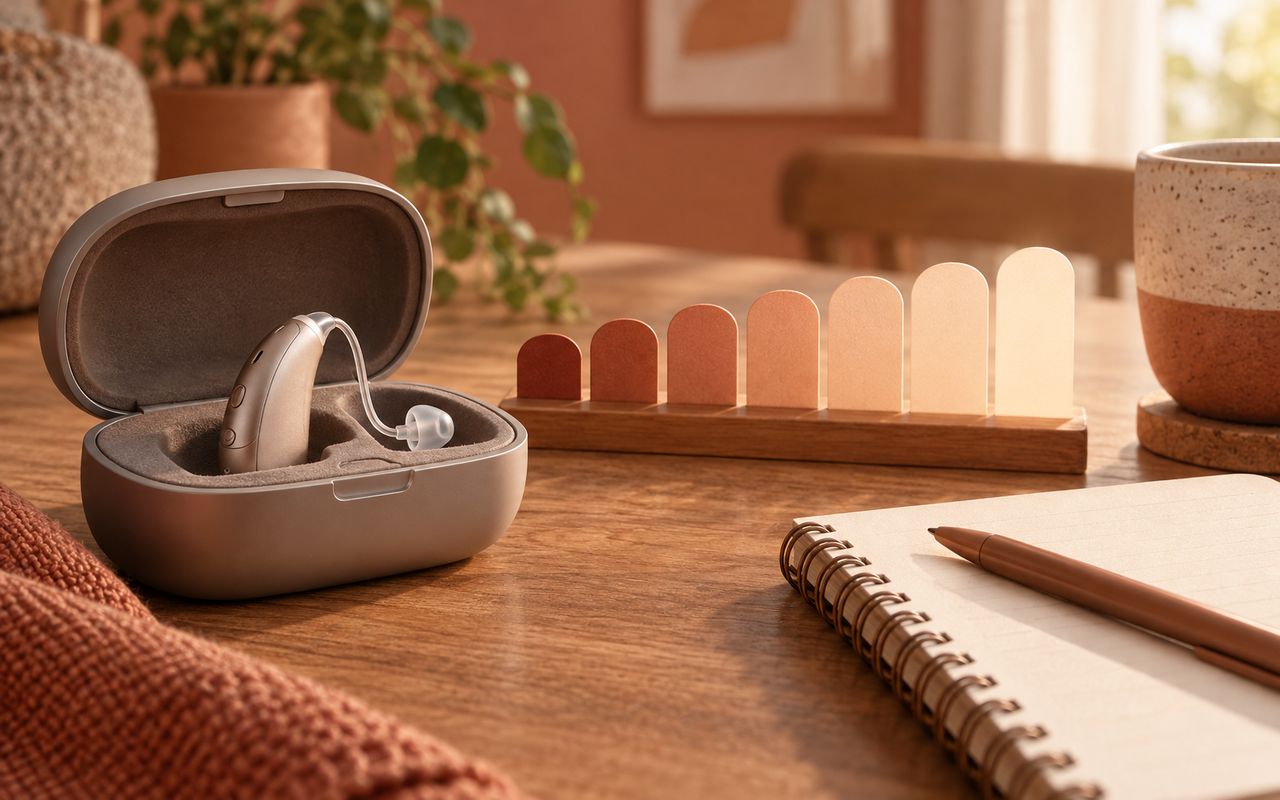
A hearing device in its case beside a sequence of daily routine markers.

Key facts

Goal Useful, comfortable access to sound—not simply maximum volume.
Track Fit, feedback, own-voice sound, speech clarity, and difficult environments.
Follow-up Use it; fitting and programming problems often require adjustment.

Step by step

  1. Practise inserting, removing, charging or changing batteries, and identifying the left and right aid.
  2. Build regular use in quieter settings, following the schedule advised for your device and ears.
  3. Move to harder settings and note exactly what remains uncomfortable or unclear.
  4. Use follow-up support for fit, feedback, loudness, or programming problems.

Start by learning the device

The NIDCD hearing-aid guide recommends practising insertion and removal, identifying right and left aids, handling batteries or charging, and learning volume and program controls. Do this before judging sound quality in a busy environment.

If the product is professionally fitted, ask the provider to watch you insert it and to explain cleaning, wax protection and follow-up. For an OTC aid, use the official instructions and support channel; do not rely on a reseller’s short video alone.

Build useful listening practice

Regular use can help the brain reacquaint itself with sounds that were previously missed. Begin with manageable settings such as one-to-one conversation at home, then add television, small groups and noisier places. Follow any wearing schedule given by your clinician, particularly if your ear canal or skin is sensitive.

Hearing aids make sounds more audible but do not perfectly separate wanted speech from every competing sound. The FDA overview describes aural rehabilitation as a patient-centred way to reduce the communication impact of hearing loss alongside devices.

Keep a problem log

Write down the environment and the exact problem:

  • comfort or retention;
  • whistling or feedback;
  • your own voice sounding blocked or too loud;
  • soft speech still unclear;
  • ordinary sounds uncomfortably loud; or
  • phone or television connection failures.

“It doesn’t work” is hard to troubleshoot. “Speech is clear at home but cutlery is painfully sharp in cafés” gives support staff something actionable.

Know what is not an adjustment issue

A new device may feel unfamiliar, but it should not cause pain, broken skin, bleeding, discharge or swelling. Stop using it and seek professional help if those occur. Sudden hearing deterioration, marked one-sided symptoms or severe dizziness also need medical assessment rather than a programming change.

Use the trial or return window deliberately. Test the situations you named before buying, record outcomes, and ask for adjustments early enough to make an informed keep-or-return decision.

Frequently asked

Is it normal for my own voice to sound different?
It can happen when starting, but persistent or bothersome changes may be adjustable. Record when it occurs and ask for support.
Should a hearing aid hurt?
No. Stop and seek support if an aid causes pain, broken skin, swelling, or discharge.

A question about this topic?

Ask the Sherpa. It answers from our guides and can show the hearing aids we list, with their supplied price, trial and warranty fields. It can’t diagnose hearing loss or choose a device for you.

Ask the Sherpa

Sources and review status

Not clinician-reviewed. The Sherpa Editorial Desk checked this article against the sources below. It has not been reviewed by an audiologist or physician. Do not use it to diagnose or treat a condition.

Sources were opened on the dates shown. Links go to the original public-health, regulator, or professional body rather than a reseller.

  1. Hearing Aids — National Institute on Deafness and Other Communication Disorders; accessed .
  2. Hearing Aids — U.S. Food and Drug Administration; accessed .