Guide Choosing & Buying

PSAP vs OTC Hearing Aid: What Is the Difference?

A PSAP is for people with normal hearing in selected situations; a genuine US OTC hearing aid is a regulated medical device for hearing loss.

Information only — not medical advice. We explain what hearing aids can and cannot do, and make no cure claims. Spotted an error? Tell us — see our corrections policy.

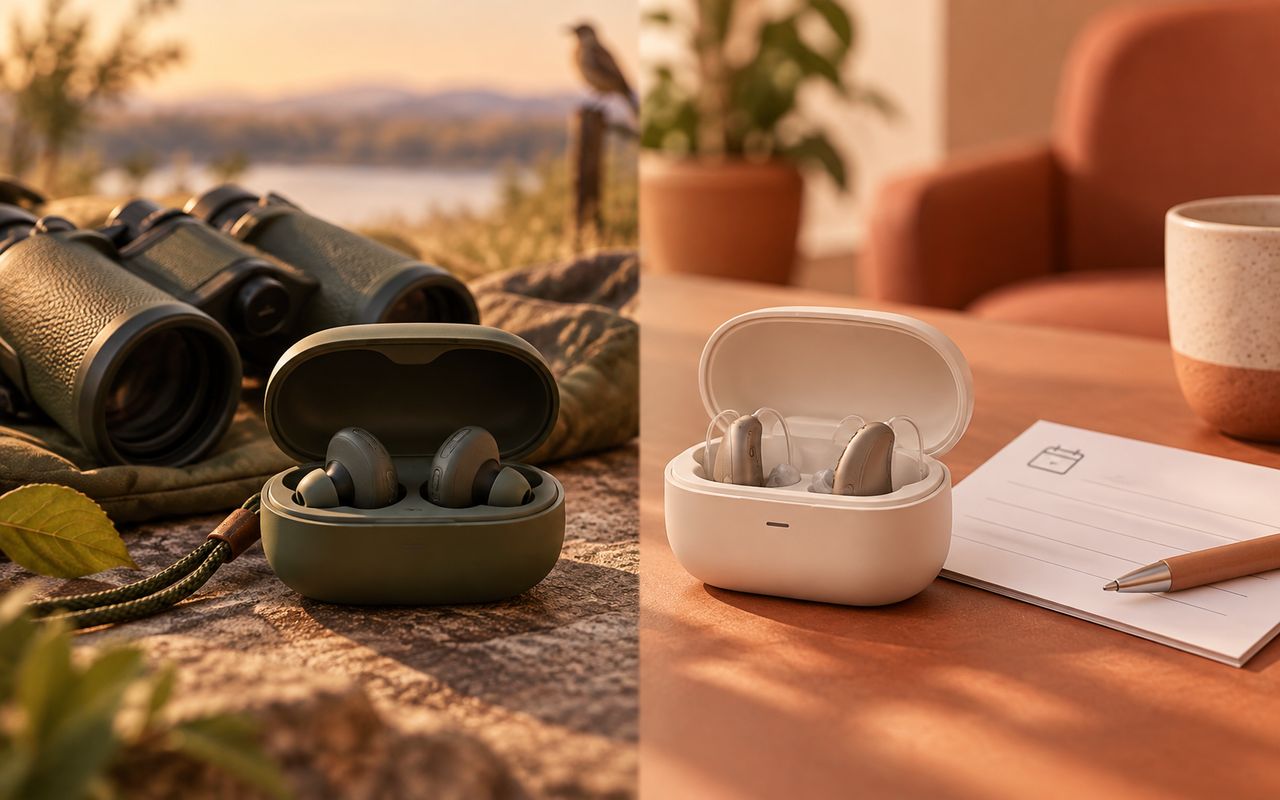
Separate sound-device cases beside binoculars and a consultation notebook.

Key facts

PSAP Consumer electronic for situational amplification by a person with normal hearing.
OTC hearing aid FDA-regulated medical device for eligible adults with perceived mild-to-moderate hearing loss.
Check Intended use, outside-box label, manufacturer, warnings, and return terms.

Step by step

  1. Check the intended use: hearing loss indicates a hearing aid; situational amplification for normal hearing indicates a PSAP.
  2. For an OTC aid, read the FDA-required outside-box information and warnings.
  3. Do not substitute either product for medical assessment when warning signs are present.

Start with intended use

The FDA consumer comparison makes the dividing line clear. Hearing aids are intended to compensate for hearing loss. PSAPs are intended for people with normal hearing who want to amplify particular sounds in situations such as birdwatching or listening at a distance.

Both may sit behind the ear, use earbuds or connect to a phone. Appearance, price and the word “amplifier” do not settle the category.

Why does the category matter?

US OTC and prescription hearing aids are medical devices. The FDA sets requirements for their safety, effectiveness and labelling. A PSAP is not a medical device; the FDA device page describes it as an electronic product for non-hearing-impaired listeners.

That does not mean every hearing aid will fit every person, or that every PSAP is poor quality. It means the products have different intended users and regulatory obligations.

How can you check a product listing?

Look beyond the marketplace title. Check:

  • the manufacturer’s exact product name and intended use;
  • whether the box identifies it as an OTC hearing aid;
  • the required warnings and user information;
  • the age and hearing range stated;
  • who provides support and software updates; and
  • return, warranty and replacement-part terms.

Be cautious when a seller uses “FDA registered” as if it were proof that a specific product is FDA approved. Registration or listing is not the same claim as premarket approval.

When should shopping stop?

Neither a PSAP nor a self-selected OTC aid should delay care for sudden, rapidly worsening, one-sided, painful or draining hearing symptoms, marked dizziness, or severe difficulty. An assessment is also the better starting point if you are uncertain whether your hearing difficulty is mild-to-moderate.

Frequently asked

Can a seller call a PSAP a hearing aid?
The intended use and regulatory category matter, not just the sales wording. Check the package and manufacturer information rather than relying on a marketplace title.
Is a PSAP suitable for hearing loss?
No. FDA guidance says PSAPs are for people with normal hearing in specific situations, not to compensate for hearing loss.

A question about this topic?

Ask the Sherpa. It answers from our guides and can show the hearing aids we list, with their supplied price, trial and warranty fields. It can’t diagnose hearing loss or choose a device for you.

Ask the Sherpa

Sources and review status

Not clinician-reviewed. The Sherpa Editorial Desk checked this article against the sources below. It has not been reviewed by an audiologist or physician. Do not use it to diagnose or treat a condition.

Sources were opened on the dates shown. Links go to the original public-health, regulator, or professional body rather than a reseller.

  1. Hearing Aids and Personal Sound Amplification Products: What to Know — U.S. Food and Drug Administration; accessed .
  2. Other Hearing Devices and Products — U.S. Food and Drug Administration; accessed .