Tip Styles & Technology

How to Clean Hearing Aids Safely

Information only — not medical advice. Report an error.

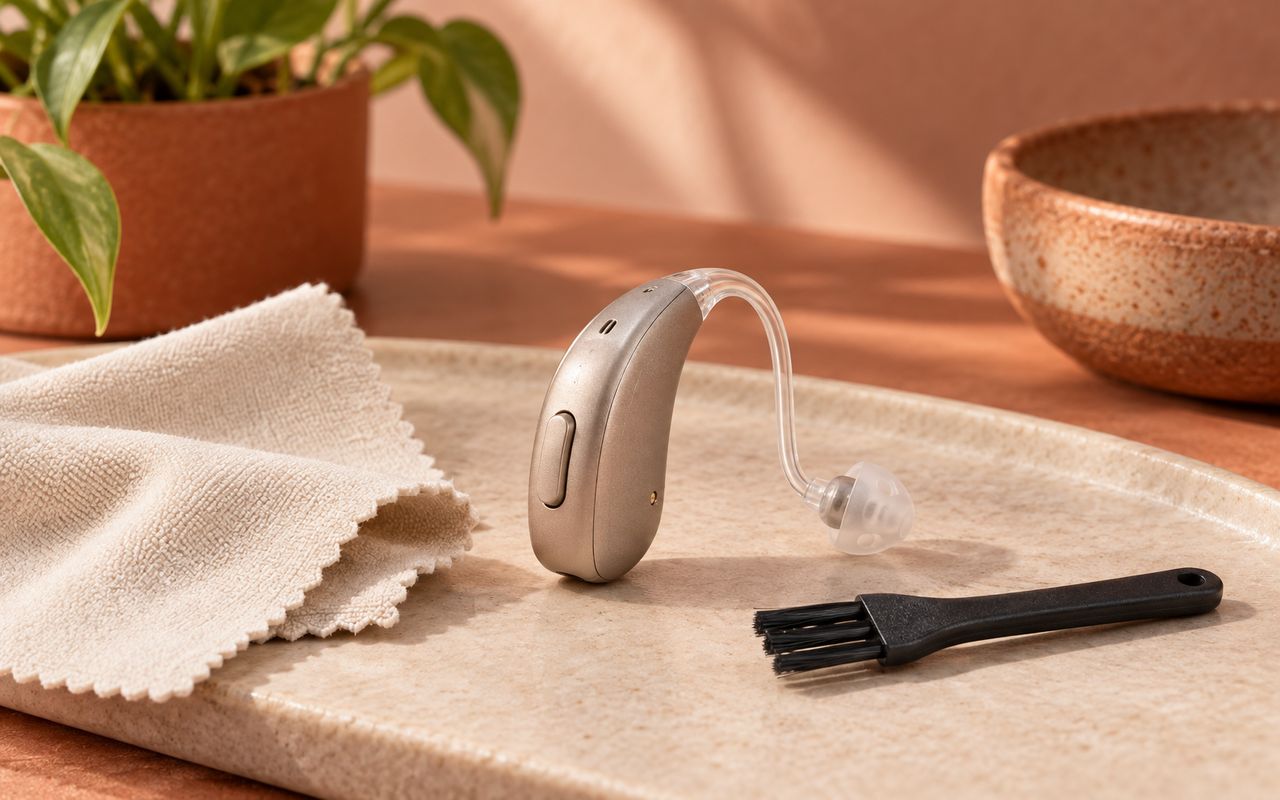
A dry hearing aid beside a soft cloth and a small cleaning brush.

Do this instead

  • Wash and dry your hands, then place the aid on a clean, dry, well-lit surface.
  • Wipe the exterior and inspect microphone ports, sound outlets, domes, tubing, and wax protection.
  • Use only the tool and replacement parts specified for that model; never force a blockage inward.
  • Store the aid as instructed and arrange service for damage, persistent blockage, or reduced output.

Key facts

Authority The exact model's instructions for use.
Avoid Running water, solvents, sprays, high heat, and improvised tools unless explicitly permitted.
Escalate Cracks, corrosion, pain, persistent blockage, or reduced sound after routine care.

Use the instructions for the exact model

Hearing aids differ in wax guards, receivers, domes, earmoulds, tubing, charging contacts and water resistance. The manual is the controlling source. The NIDCD hearing-aid guide gives broad care principles—keep aids away from heat and moisture and follow instructions—but it cannot replace model-specific directions.

Before cleaning, wash and dry your hands. Work over a towel or table rather than a sink or hard floor. Good light makes it easier to spot a blocked opening or cracked part.

Keep the routine dry and gentle

Wipe the outer surface with the supplied or manufacturer-approved cloth. Inspect microphone ports, the sound outlet, dome or earmould, and any replaceable wax guard. Use only the brush, loop or replacement part specified by the maker, and brush debris away from an opening rather than pushing it deeper.

Do not spray cleaner directly onto the aid. Do not improvise with pins, needles or compressed air. A water-resistant rating does not mean the aid should be rinsed or submerged.

Treat the ear separately from the device

Cleaning a hearing aid is not the same as cleaning the ear canal. Do not insert the device tool or cotton bud into the ear. If wax repeatedly blocks the aid, ask a pharmacist, audiologist or clinician about ear care that is safe for your history.

The FDA hearing-aid overview distinguishes regulated hearing aids from amplification products and points users back to professional and device-specific support. Use the manufacturer or provider when output changes after routine cleaning.

When should you stop?

Arrange service if you find a cracked shell, damaged wire, corrosion, loose dome, blocked receiver you cannot safely clear, or reduced sound that persists. Stop wearing the aid and seek clinical advice if it causes pain, broken skin, swelling or discharge.

Frequently asked

Can I rinse a hearing aid under the tap?
Not unless the manufacturer explicitly says that the exact device or removable part can be rinsed. Water resistance is not a cleaning instruction.
Can I use alcohol or household cleaner?
Only if the manufacturer names it as safe. Solvents and sprays can damage coatings, microphones, seals, or earmould materials.

A question about this topic?

Ask the Sherpa. It answers from our guides and can show the hearing aids we list, with their supplied price, trial and warranty fields. It can’t diagnose hearing loss or choose a device for you.

Ask the Sherpa

Sources and review status

Not clinician-reviewed. The Sherpa Editorial Desk checked this article against the sources below. It has not been reviewed by an audiologist or physician. Do not use it to diagnose or treat a condition.

Sources were opened on the dates shown. Links go to the original public-health, regulator, or professional body rather than a reseller.

  1. Hearing Aids — National Institute on Deafness and Other Communication Disorders; accessed .
  2. Hearing Aids — U.S. Food and Drug Administration; accessed .