Guide Choosing & Buying

OTC vs Prescription Hearing Aids

The FDA-defined difference between US OTC and prescription hearing aids, who OTC products are for, and when professional care is safer.

Information only — not medical advice. We explain what hearing aids can and cannot do, and make no cure claims. Spotted an error? Tell us — see our corrections policy.

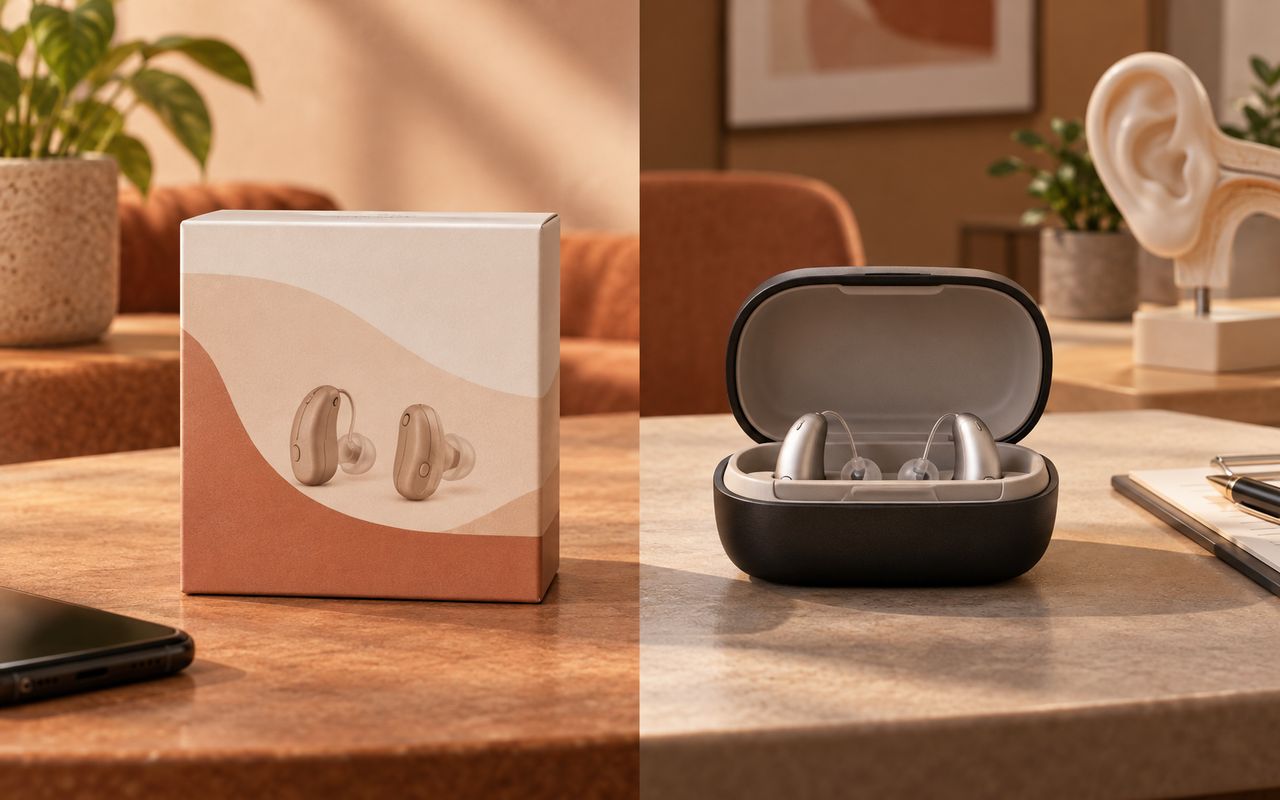
A generic retail hearing-device package beside a fitting case.

Key facts

OTC user US adult aged 18 or older with perceived mild-to-moderate hearing loss.
Prescription scope May be appropriate across ages and degrees, based on the device and professional evaluation.
Both Hearing aids are regulated medical devices in the US.

Step by step

  1. Confirm that you are an adult with perceived mild-to-moderate loss and no warning signs before considering US OTC care.
  2. Compare the package label, adjustment method, support, warranty, and return terms.
  3. Choose professional assessment when hearing is severe, sudden, asymmetric, fluctuating, painful, draining, or otherwise concerning.

What does “OTC” legally mean in the US?

The FDA OTC guidance defines OTC hearing aids as air-conduction medical devices for adults aged 18 or older with perceived mild-to-moderate hearing loss. They can be bought in stores or online without a medical exam, prescription or professional fitting.

Some are self-fitting through software or an app; others use simpler user controls. The outside-box label must provide required information and warnings. “OTC” is a regulatory category, not a general synonym for anything that amplifies sound.

What does prescription care add?

Prescription hearing aids are obtained through licensed hearing-care professionals and can be indicated for broader ages and degrees of hearing loss. The pathway can include ear examination or referral, calibrated testing, device selection, physical fit, programming, verification and follow-up.

Professional care does not guarantee that every device or clinic is right for you. Ask what services are included, how benefit will be measured, and what fees are refundable.

Who should not self-direct an OTC purchase?

The NIDCD OTC guide highlights warning signs such as sudden or quickly worsening loss, marked difference between ears, fluctuating hearing, or one-sided tinnitus. FDA labelling also directs users to seek medical care for specified ear symptoms.

OTC devices are not for children, severe or profound hearing loss, or problems that need diagnosis. Pain, drainage, visible deformity, severe dizziness, sudden change or neurological symptoms should move the decision from shopping to clinical care.

How should you compare the routes?

Compare the whole care package:

  • who tests and explains your hearing;
  • how the aid is adjusted and verified;
  • remote, phone or in-person support;
  • physical fit and replacement parts;
  • trial or return terms and non-refundable fees; and
  • warranty, repair and loss coverage.

Choose the route that matches both the hearing need and the amount of support you can realistically use.

Frequently asked

Are OTC hearing aids the same as cheap amplifiers?
No. A genuine OTC hearing aid is an FDA-regulated medical device for hearing loss; a PSAP is a consumer product for people with normal hearing.
Can children use OTC hearing aids?
No. The US OTC category is for people aged 18 or older. Devices for younger users follow prescription care.

A question about this topic?

Ask the Sherpa. It answers from our guides and can show the hearing aids we list, with their supplied price, trial and warranty fields. It can’t diagnose hearing loss or choose a device for you.

Ask the Sherpa

Sources and review status

Not clinician-reviewed. The Sherpa Editorial Desk checked this article against the sources below. It has not been reviewed by an audiologist or physician. Do not use it to diagnose or treat a condition.

Sources were opened on the dates shown. Links go to the original public-health, regulator, or professional body rather than a reseller.

  1. OTC Hearing Aids: What You Should Know — U.S. Food and Drug Administration; accessed .
  2. Over-the-Counter Hearing Aids — National Institute on Deafness and Other Communication Disorders; accessed .